
BMW engines are known for their balance of performance, refinement, and engineering excellence. Platforms like the M20, M30, M50, M52, and M54 have become favourites among enthusiasts for builds ranging from daily drivers to full race cars.
But once you start pushing beyond factory limits, a reality sets in:
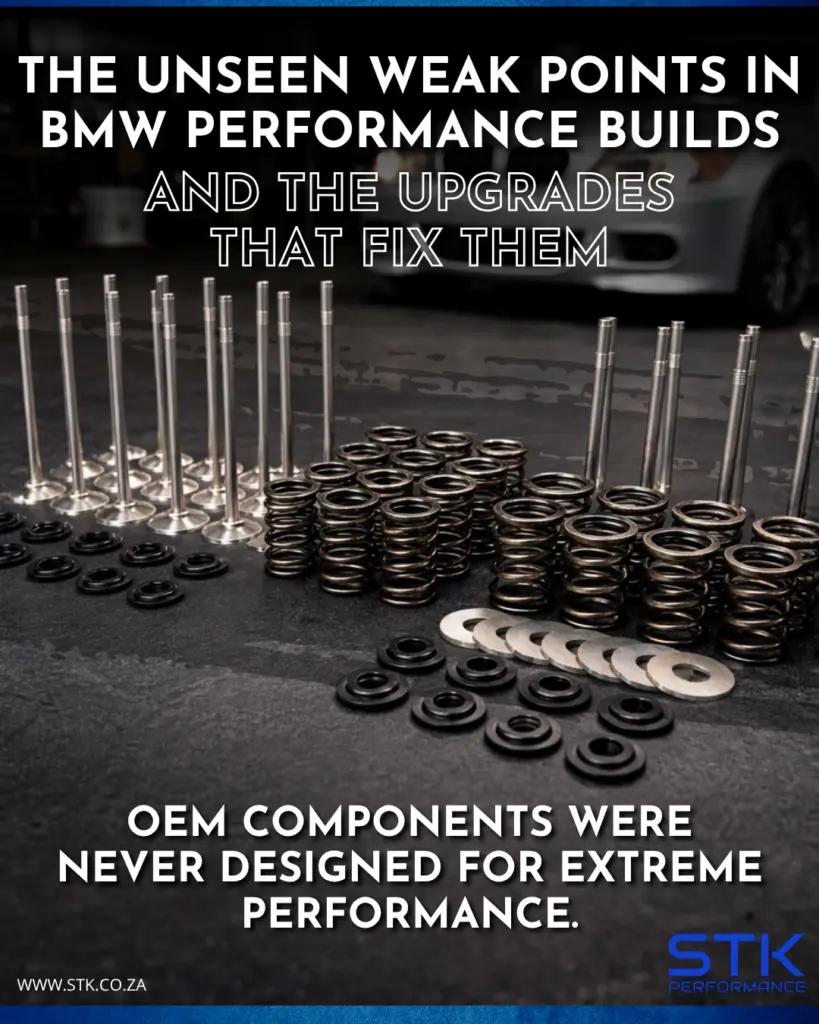
OEM components were never designed for extreme performance.
And that’s where problems begin.
The Problem: Factory Limits vs Performance Demands
When modifying a BMW engine for more power, higher RPM, or forced induction, multiple weak points start to appear across the engine.
These aren’t flaws—they’re simply the result of factory engineering prioritising:
- Comfort
- Longevity under normal driving
- Cost efficiency
- Moderate performance limits
Once you exceed those boundaries, several critical components begin to struggle.
Common Failure Points in BMW Performance Builds
1. Valvetrain Instability
At higher RPM or with aggressive camshafts, factory components can’t maintain proper valve control.
This leads to:
- Valve float
- Loss of power
- Risk of catastrophic engine damage
2. Weak Internal Components
Stock internals often aren’t designed for:
- Turbocharging
- High compression builds
- Sustained high-load driving
This can result in:
- Component fatigue
- Reduced reliability
- Premature failure under stress
3. Poor High-RPM Reliability
BMW engines love to rev—but only within their designed limits.
Push beyond that and you’ll see:
- Inconsistent performance
- Increased wear
- Reduced engine stability
4. Heat & Pressure Limitations
Performance builds generate significantly more:
- Cylinder pressure
- Heat
- Mechanical stress
Factory components often can’t handle these extremes over time.
The Reality: Power Without Support = Failure
Many builds focus on:
✔ Bigger turbos
✔ Aggressive cams
✔ Increased boost
But overlook the supporting components needed to handle that power.
That’s where builds fail—not from ambition, but from imbalance.
The Solution: Purpose-Built BMW Performance Upgrades from STK
STK’s BMW product range is designed to solve these exact problems—not just improve performance, but support it reliably.
These upgrades focus on strengthening the engine where it matters most.
How STK BMW Performance Products Solve These Issues
1. Strengthening the Valvetrain
Upgraded components like performance valve springs and retainers:
- Maintain control at high RPM
- Prevent valve float
- Allow safe use of aggressive camshafts
2. Supporting High-Performance Builds
Whether you’re running:
- Turbo setups
- High-compression NA builds
- Track or drift applications
STK components are built to handle increased loads without failure.
3. Improving Reliability Under Stress
Instead of pushing factory parts beyond their limits, upgraded components:
- Reduce wear
- Handle higher stress loads
- Improve long-term durability
4. Unlocking True Engine Potential
With the right supporting parts, your BMW engine becomes:
Limited by factory constraints
A stable, high-performance platform
Real-World Applications
STK BMW upgrades are essential for builds like:
- Turbocharged street cars
- Track and race builds
- Drift setups
- High-revving NA engines
- Performance camshaft applications
These aren’t cosmetic upgrades—they’re foundational.
The Bigger Picture: Build It Right the First Time
Every engine build has a weakest link.
In many BMW builds, that weakness comes from relying on stock components under extreme conditions.
Upgrading with purpose-built parts ensures:
- Consistent performance
- Engine safety
- Long-term reliability
Conclusion
The problem is simple:
Factory BMW components are not designed for high-performance abuse.
The result?
- Power loss
- Instability
- Increased risk of failure
The solution?
Upgrading with a complete range of performance-focused components from STK.
Because real performance isn’t just about making power—
It’s about controlling it, sustaining it, and trusting it.