Understanding how and why engine valves fail is critical for any engine builder or tuner. This guide covers the most common types of valve damage, what causes them, and how to prevent them.
Thermal Overstress
Thermal overstress occurs when extreme and fluctuating temperatures inside the combustion chamber exceed the valve material’s limits. This is one of the most common failure modes, particularly on exhaust valves where heat exposure is greatest.
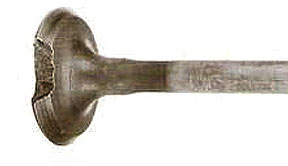
Head Fracture Along the Radius
What happens: The valve head separates along a chord of the face, typically beginning as a hairline crack in the under-head radius that grows under repeated thermal cycling.
Root cause: Extreme pressure and temperature within the combustion chamber — most often seen on exhaust valves.
Contributing factors:
Engine over-revving or valve float
Insufficient valve spring pressure
Excessive seating velocity
Detonation or abnormal combustion
Wrong fuel grade or octane rating
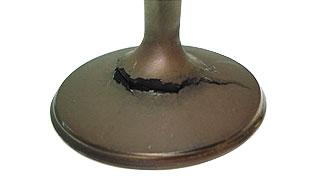
Radial Cracking from Thermal Fatigue
What happens: A crack develops radially inward from the valve margin. If not caught early, the fissure will propagate until the head breaks away entirely.
Root cause: Thermal fatigue from extreme temperatures and uneven heat distribution across the valve face.
Contributing factors:
Sudden temperature changes (thermal shock)
Sustained engine overloading
Excessive combustion chamber temperatures
Weak or fatigued valve springs
Seating speed too high
Mechanical Overstress
Mechanical overstress refers to valve damage that originates from physical forces rather than combustion heat. This category covers wear and breakage related to valvetrain geometry, clearances, and operating conditions outside the combustion chamber.
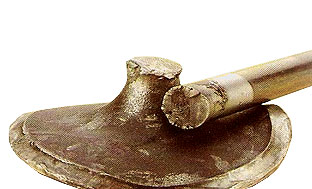
Head-to-Stem Separation
What happens: The valve head separates from the stem due to repeated bending stress concentrated at the transition area.
Root cause: Cyclical mechanical stress focused on the stem just below the head.
Contributing factors:
Weak springs leading to valve float
Sustained over-revving
Seating velocity too high from excessive lash
Incorrect valvetrain clearances
Particularly common on valves with rectangular keeper grooves
Keeper Groove Fracture
What happens: The valve stem fractures at or near the keeper groove — one of the most common stress concentration points on any valve.
Root cause: Surface-level material fatigue from mechanical work hardening at the keeper-to-groove contact zone.
Contributing factors:
Incorrectly fitted or defective keepers
Pre-existing damage to keeper grooves
Valve float conditions
Excessive valvetrain clearances
Over-revving, especially with rectangular groove designs
Impact & Fatigue Breakage
Valve breakage can occur either instantly from a single catastrophic event — or gradually over thousands of cycles as micro-cracks propagate through the material. Knowing which type you’re looking at helps identify what went wrong.
Impact Failure
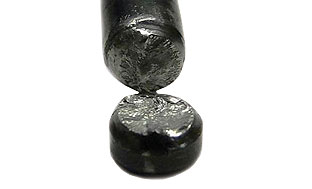
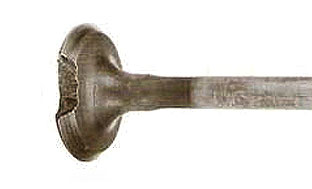
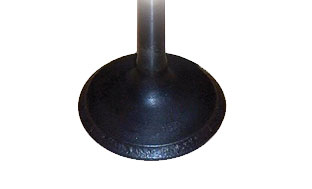
This is the signature appearance of a sudden impact break — typically the result of a piston-to-valve collision. The fracture surface shows no progressive fatigue marks, confirming the break occurred in a single event.
Common when timing components fail, the belt or chain skips, or valve-to-piston clearance is insufficient.
Fatigue Failure
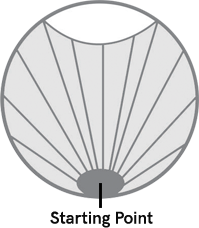
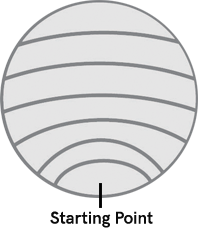
Unlike impact failure, fatigue breakage develops gradually over thousands of operating cycles. It starts with a small surface defect or stress point and slowly propagates until the valve can no longer carry the load.
The fracture surface typically shows distinct progression marks (beach marks) radiating from the origin point.
Valve Burning & Face Pitting
These failure modes target the sealing surfaces of the valve and seat. Once the seal is compromised, extreme heat and trapped debris cause progressive, accelerating damage.
Valve Burning
What happens: The valve face becomes scorched and eroded — visible as burnt or torched areas on the sealing surface.
Root cause: Concentrated heat in a localised area of the valve head causes distortion and seat leakage, creating a hot gas path that erodes the face.
Contributing factors:
Insufficient stem-to-guide clearance
Worn valve guides or stem-to-guide misalignment
Pre-ignition from lean mixtures or incorrect fuel
Incorrect compression ratio
Cooling system faults or incorrect lash settings
Excessive carbon deposits on the valve
Valve Face Pitting
What happens: Small craters or pits develop on the valve face and seat surfaces, preventing a proper seal and causing progressive leakage.
Root cause: Hard particles — carbon, combustion residue — become trapped between the valve face and seat during closure, embedding into the surface.
Contributing factors:
High oil consumption (via piston rings, guides, or seals)
Most valve failures share a common thread — the valvetrain was pushed beyond the limits of its components. Whether it’s weak springs, poor materials, or incorrect clearances, the solution is to build with parts that are up to the task.
At STK Performance, we supply forged stainless steel valves, dual valve spring kits, and complete valvetrain upgrade packages engineered for performance applications. If you’re building an engine that will see high RPM, boost, or track use — don’t leave your valvetrain to chance.